How I got into wildlife photography

I’d love to tell you I was one of those kids who grew up obsessed with wildlife, like so many other wildlife photographers and filmmakers. I wasn’t.
I was born and grew up in Sweden, but I have been living in the UK since the beginning of 2018. I grew up in Västerås, a city on the shore of Lake Mälaren, west of Stockholm, and similar in size to Exeter. Ever since I can remember, nature has not been far away. Deep forests and the Stockholm archipelago have always been a calming escape, and my parents took my sister and me there often.
As a kid, it was always exciting to see a moose, a fox or an eagle when we came across one. A moose would wander by the window of my mum and dad’s summer cabin from time to time. I would walk up to the window, have a look, and once it was gone I’d go back to whatever I was doing. The excitement was gone as quickly as it appeared. An interest in wildlife was not there yet.
What did stick was filmmaking - the mystery of how films get made. I was always amazed when I came across some behind-the-scenes footage. Watching how they were made was what made me want to make my own films as a kid. So my poor sister and cousins became my cast and production crew. We made everything from time-travelling sci-fi to superhero slapstick films. There was never a plan. I just came up with something on the spot and pressed record.
Photography came years later, and it started with an empty wall. By then I’d been married for a couple of years, and my wife and I had just moved into a new flat with bare walls we wanted to fill. We wanted prints of places that meant something to us. So on the next visit to Sweden we borrowed my sister’s DSLR, a Canon EOS 1300D, and got to work.
I had no idea what I was doing. But we came home with a few pleasant photos of familiar places and got them up on the wall. All shot in Auto.
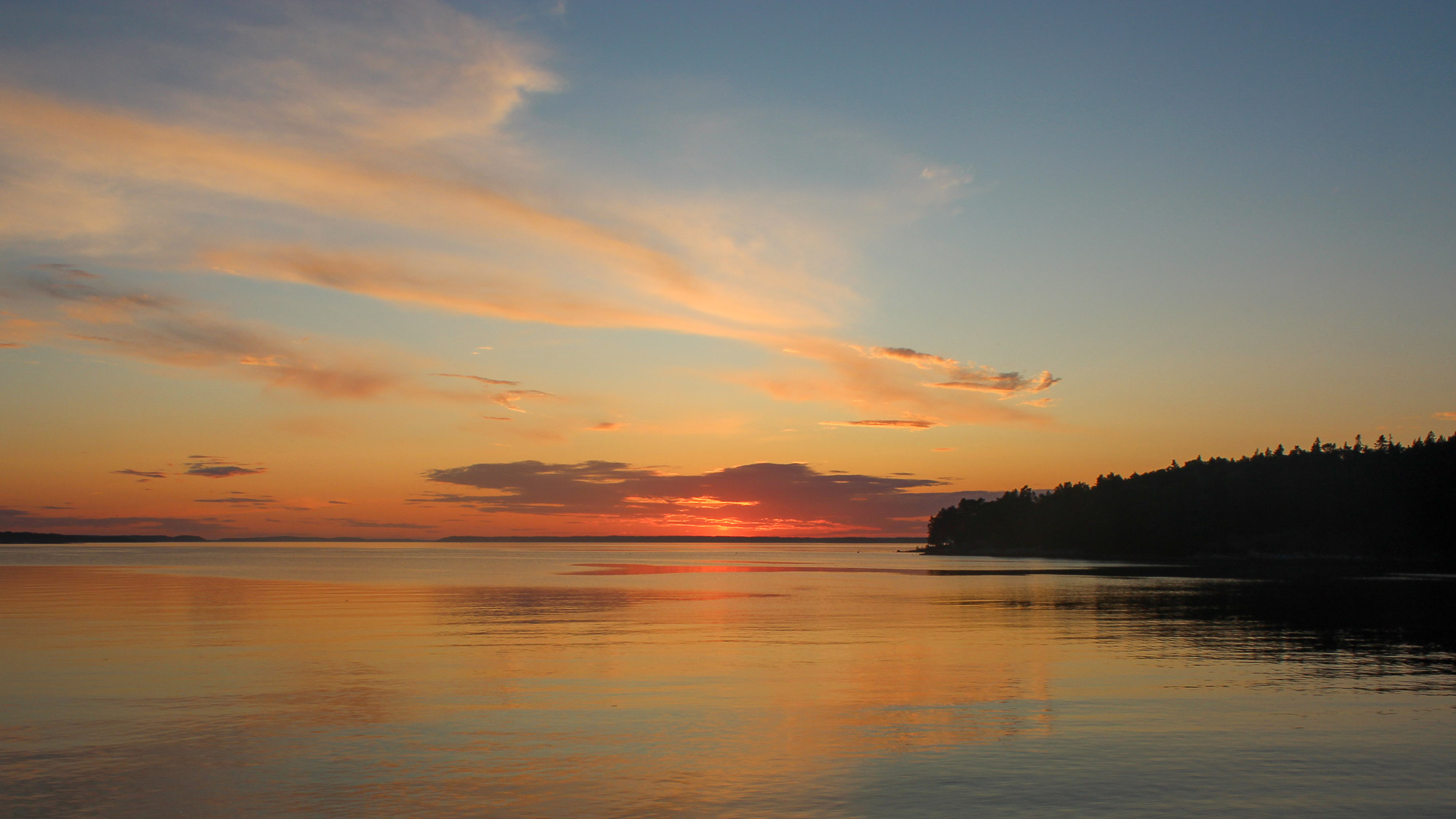
But it got me thinking. Why did the camera have all these modes? What did Landscape, Sport or Portrait actually change? And what could Manual do that Auto couldn’t?
I’ve always wanted to know how things work (the same curiosity that drew me to behind-the-scenes footage as a kid), so those questions sent me down a YouTube rabbit hole. One YouTuber I keep coming back to is Simon d’Entremont, a Canadian nature photographer. He explained how a camera works, and how to use one on wildlife.
From there, I was hooked. Photography may be for everyone, but I’m an introvert, and so many genres mean pointing a camera at people. What suits someone who feels too awkward to ask a stranger if it’s alright to take their photo? Wildlife was the clear pick and Simon’s videos gave me somewhere to start.
Next to most wildlife photographers and filmmakers, my natural-history upbringing doesn’t just pale in comparison. It’s blown out pure white. However, I have a unique perspective. I know exactly what it’s like to not notice any of it. That changed in South Africa.
Not long after my wife and I arrived, I noticed that some of the trees had a woven ball of grass hanging from them. At first I wasn’t sure whether it was fruit, a parasite similar to the mistletoe we have in the UK, or a nest.
Later, after closer inspection, I could see that they had an opening and this yellow and black bird kept landing and taking off from it. A quick Google search told me that it was the nest of a southern masked weaver. This is a common bird in South Africa, as common as the Robin is here.
The next day I set up my camera on a tripod with a telephoto lens to see if I could capture this bird in action. What impressed me wasn’t my photo or video. It was how the bird was building his nest. The male weaves his nest from strips of grass using his beak like a knitting needle. This bird could build a nest more complex than most people could manage with proper tools. It made me want to know everything about it.
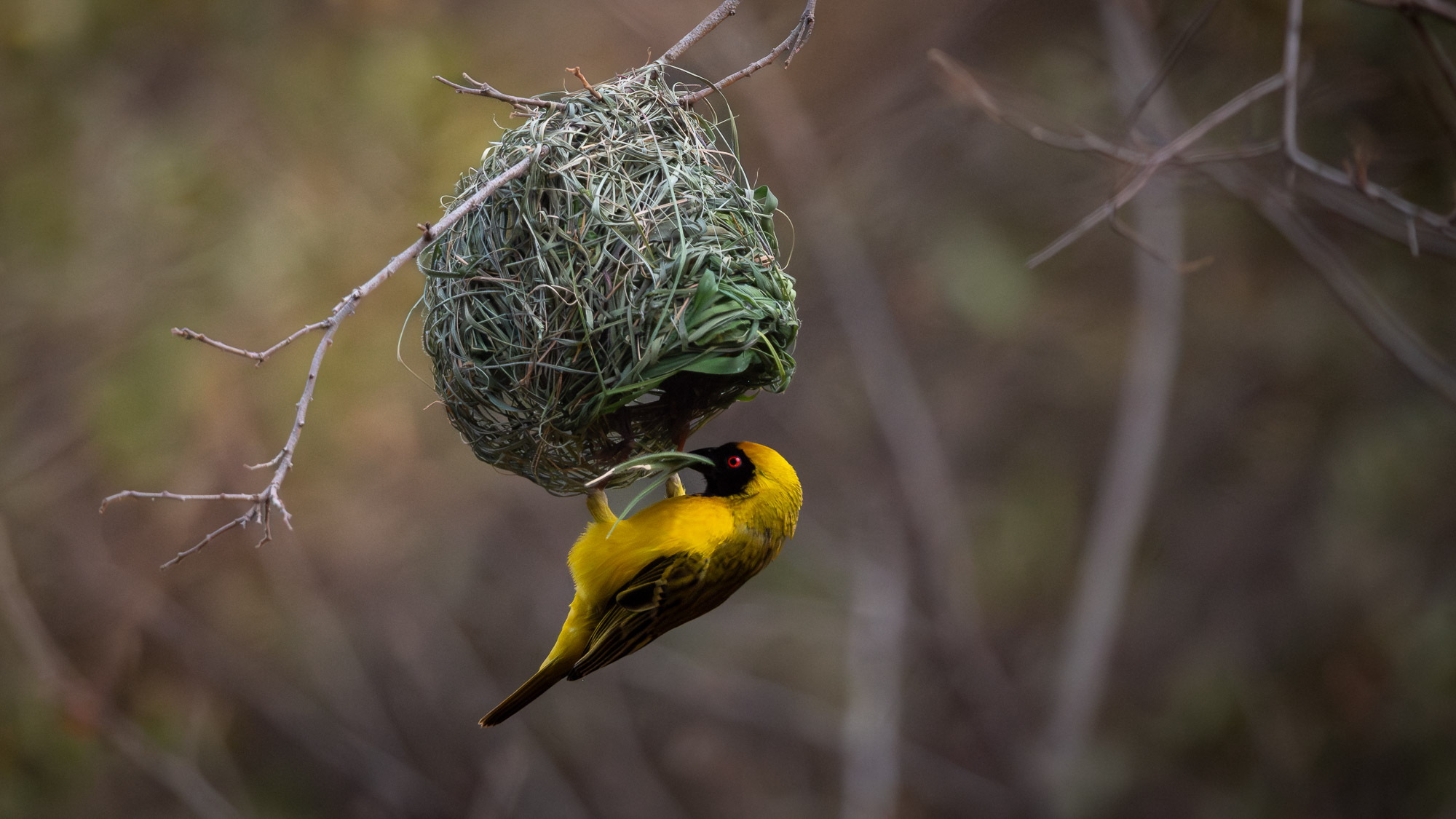
This is one of many encounters where the animal’s behaviour made me want to tell everyone I knew what this animal was capable of. Most of us miss that. Too much else is competing for our attention.
I’ve been photographing wildlife for three years now. I have learned a lot, sharpened my skills and upgraded my gear (these days a Nikon Z6 and a Sigma 150-600mm). Have I mastered it? No, and I don’t think anyone ever does. There are always new techniques and more fieldcraft to learn. Master one species and there’s always another. That’s why I’m starting this journal: so you can follow along as I keep learning, especially now that I’m moving more into wildlife filmmaking. The kid who once directed his poor sister and cousins is making films again. This time, the cast doesn’t take direction.
The animals around us have their own stories going on. If I can tell one well enough that somebody stops, watches a bird a bit longer than they meant to and walks away caring, that matters more to me than the photograph.